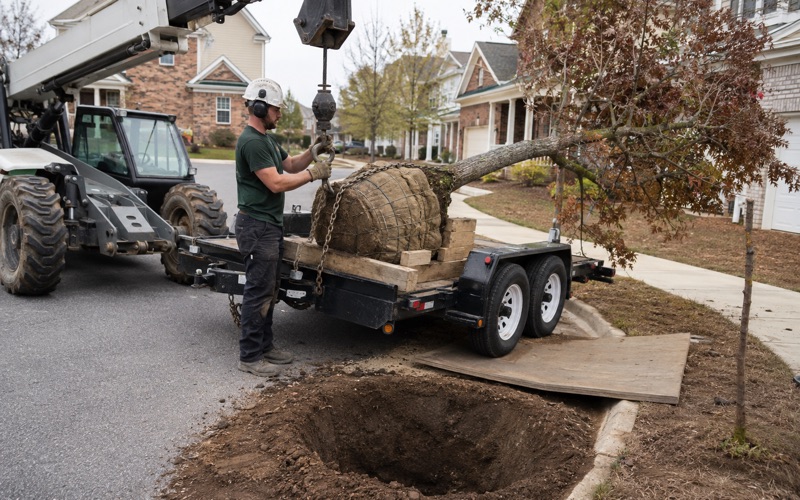
Madison Tree Removal Pros brings more than twenty years of Tennessee Valley tree work to tree removal in Redstone Arsenal, and we scope it the way the post is actually organized: as institutional vegetation work bought by a directorate, a contracting officer or a property manager working under contract.
That distinction is not a marketing posture. Redstone Arsenal is federal land, so the questions that settle an ordinary removal — who holds the tree, who authorizes the cut, who pays for the haul — resolve through a chain of federal offices rather than at a municipal counter. A quote that ignores that chain is a quote nobody on post can act on.
So we begin where the work begins here: which office holds the acre, what the scope of work has to say about access and disposal, and how a crew and its equipment reach the stem at all. Everything below follows from those three questions.
Who holds the acre, and who signs the scope
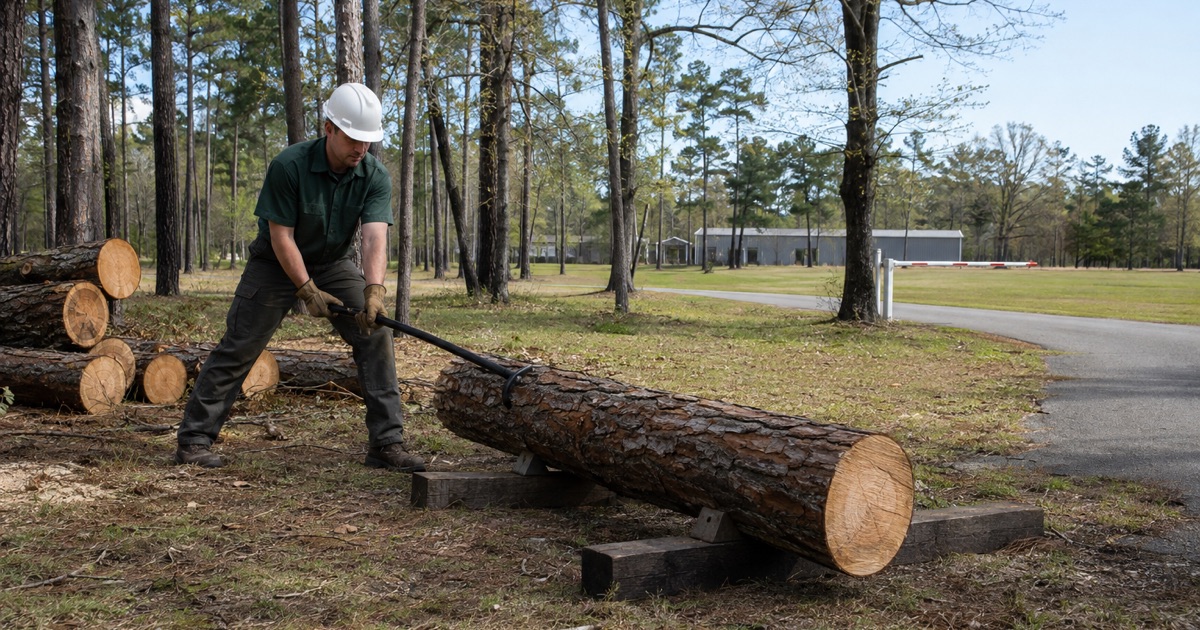
Redstone Arsenal sits in Madison County adjacent to Huntsville, across roughly 57 square miles of rolling terrain, and it is an installation rather than a municipality. There is no city council over it, no municipal tree ordinance, no city forester, and no city permit that reaches inside the boundary.
The housing figures explain the rest. ACS 2024 five-year estimates record 351 total housing units in the census-designated place, of which 9 are owner-occupied one-unit detached homes against 332 renter-occupied units — 2.6 percent owner-occupied, in a place the 2020 census counted at 837 residents. There is effectively no private lot here to quote against.
The residential side is a contract, not a household
Redstone Family Housing is managed by Hunt Military Communities. Secondary reporting puts that portfolio at 352 traditional and renovated homes across seven communities, a roster best treated as indicative rather than exact. Either way, the party deciding about a declining tree beside a family home is a property manager working under a government contract, with a maintenance budget and a written scope behind the decision.
The installation side runs through Public Works
Redstone Arsenal Regulation 200-3, Natural Resources, names its proponent as the Chief, Environmental Management Division, Directorate of Public Works, and applies to all organizational elements including tenant activities. Suggested improvements to it are directed to that same division under the office symbol IMRE-PWE. With more than 75 tenant agencies on post — NASA’s Marshall Space Flight Center, Army Materiel Command, the Missile Defense Agency, Aviation and Missile Command, US Space Command and FBI operations among them — the grounds around one building are routinely occupied by one organization and managed by another.
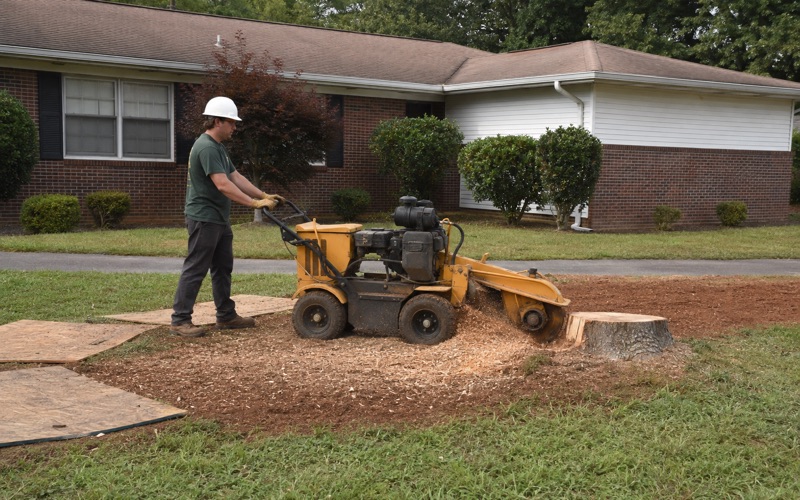
For an estimate, that changes the format more than the price. We itemize the takedown, the stump and the debris haul as three separate lines, state plainly whether haul-away sits inside the number, and say whether grindings, chips and rounds leave with the truck or stay on site. Those are the lines a facilities file has to reconcile, and folding them into a single figure makes one bid impossible to compare against another.
Looking for tree-removal closer to Triana? See Triana Tree-Removal.
A managed working forest rather than a residential canopy
Of the 38,100 acres the installation occupies, approximately 16,000 are forested, and about 10,000 of those are suited for commercial forestry, recreational activities, mission support and ecosystem services. That is a timber and habitat resource with a management program attached.
The Sikes Act of 1960 requires Department of Defense installations to monitor and protect the ecosystems found on them in accordance with federal, state and local law, to collect data regularly on the species and ecosystems within their borders, and to maintain an integrated natural resources management plan balancing sustainable use of natural resources, the mission, recreation and conservation. The forest inventory work done here is conducted expressly to support that plan.
The field inventory completed across the summer and fall of 2020 covered 97 forested stands totaling 6,781 acres and sampled 576 plots, with individual stands ranging from 5 acres to 375 acres. Roughly 4,670 acres were mixed pine-hardwood stands, 1,442 acres hardwood stands and 669 acres pine stands.
Species are grouped by what they are for
The inventory sorts trees into eight groups by their value to the installation: pines, sweetgum, yellow-poplar, white oak species, red oak species, hickory species, eastern red cedar and other hardwood species. Pine, yellow-poplar and sweetgum can be sold to local timber markets for revenue generation, while oaks and hickories are managed primarily for wildlife habitat value. Compiled inventory data found loblolly pine, sweetgum and willow oak the most important species on the installation, with loblolly pine carrying a measured negative impact on species diversity.
That split is the operating logic of the program, and it decides what a removal actually is. Pulling a mature sweetgum out of a pine-hardwood stand is a merchantable operation with a disposal decision behind it; pulling a willow oak out of the same stand subtracts habitat value somebody was deliberately holding. Much of this ground is secondary forest, planted with commercially valuable southern yellow pines on abandoned farmland by DoD to act as a barrier and to generate revenue, over well-drained loamy soils derived from limestone erosion or alluvial deposits.
Weeden and Madkin Mountains behave differently
Weeden Mountain and Madkin Mountain are the two largest mountains on the installation, outcroppings of the nearby Cumberland Plateau, and they lie within the housing and recreation area with trails running between their peaks and along the connecting ridge. They are taller and vary far more in slope than other high ground on post, and several springs on them support a mixture of forest species not found elsewhere here.
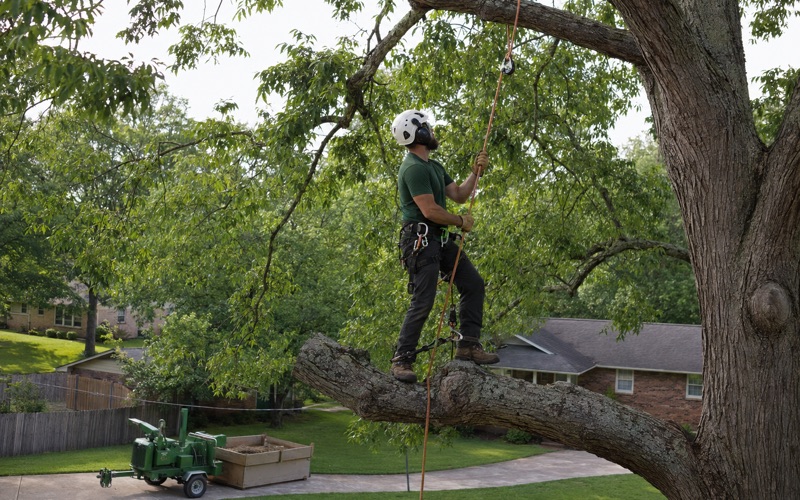
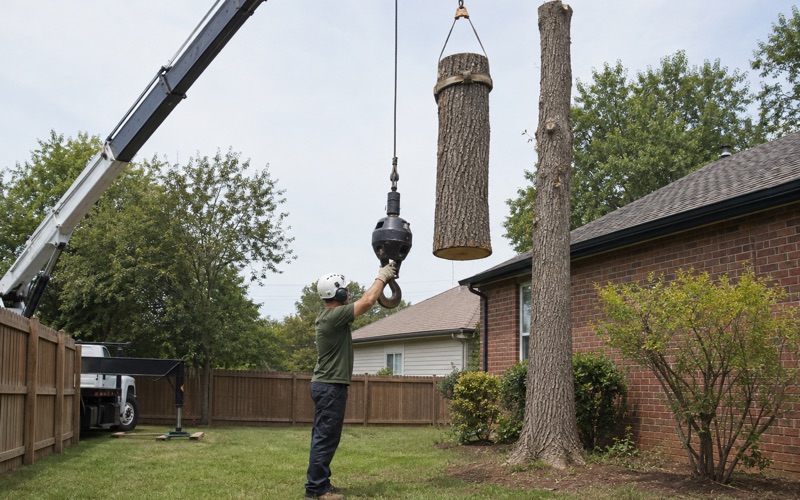
For a crew that reads as access and rigging rather than botany. Slope decides whether a knuckleboom grapple truck can reach a stem or whether the tree comes apart in sections on a bull rope through a friction device at the base, and it decides how far every chip has to travel afterward.
The gate is the first item on the schedule
Access controls the calendar on this post. Under Homeland Security Presidential Directive 12 and Army Regulation 190-13, all visitors and uncleared contractors desiring unescorted access to Redstone Arsenal must be vetted through the National Crime Information Center Interstate Identification Index, with an installation access badge issued on successful completion. The Visitor Control Center sits on Rideout Road at Gate 9 and is open 7 a.m. to 3 p.m., Monday through Friday, closed on federal holidays.
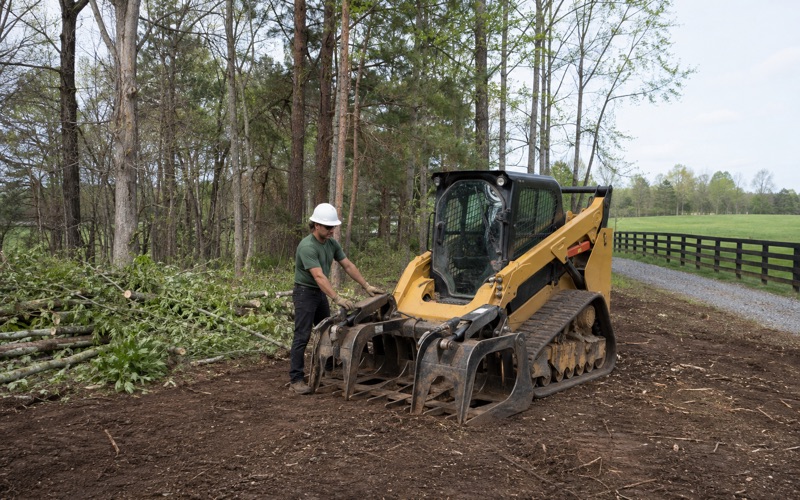
None of that is a same-day arrangement. Where we are asked to price work inside the boundary, vetting or escort time is a scheduling line ahead of the work itself, and access is measured before the tree is priced — gate width, the drop zone, carry distance back to the truck, and whether a chipper or a tracked spider lift can be staged anywhere near the stem. A crane pick that works on paper and cannot be positioned is not a plan.
More than one federal landlord on a single map
Approximately 4,085 acres of the roughly 35,000-acre Wheeler National Wildlife Refuge lie within the installation, and forested areas falling under the refuge’s jurisdiction or within the US Fish and Wildlife National Wetlands Inventory were excluded from the Arsenal’s own forest inventory as outside the jurisdiction of base personnel. The Army also holds a land-use agreement with the Tennessee Valley Authority for about 1,250 acres along the Tennessee River, which forms the southern boundary. Which agency holds a given forested acre is a real question with a real answer, and the answer changes who can authorize work on it.
Airfield airspace runs outward from the fence
Redstone Army Airfield was established in 1943. The City of Madison overlay that regulates the height of natural features and the siting of wildlife-attractant vegetation around that airfield states in its own terms that it encompasses all land outside Redstone Arsenal’s boundary, so it binds the neighbors. Inside the boundary the same airspace is the garrison’s own responsibility, and a height question near the airfield is answered on post rather than at a city counter.
Working around the mission, the bats and the borer
Regulation 200-3 records that the Directorate of Public Works, in coordination with Contracting Officers Representatives and Contracting Officers, establishes a process for selected larger contractors working over the entire installation and controlling their own work schedules to report their work requirements directly to the Directorate of Plans, Training, Mobilization and Security. It also records that changes to area availability driven by mission requirements are reported as soon as a change is identified. An area open on Monday can be closed on Tuesday for reasons nobody explains to a saw crew.
Conservation obligations narrow the window further. The installation maintains habitat for the Indiana bat and the gray bat, and hosts one of three federally protected sites for the endangered Price’s potato bean. Those are constraints on where and when a stand can be entered, and they do not bend to a production schedule.
Ash disposal is now an operational instruction
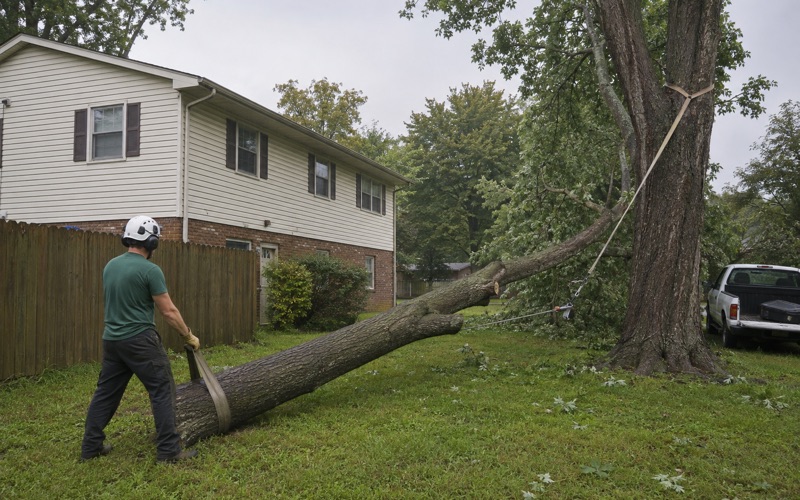
The Alabama Forestry Commission confirmed emerald ash borer in Madison and Jackson counties on June 6, 2025, its first confirmed observation in either county, and advises that infested ash trees which are cut down should preferably be burned or destroyed on-site to slow the dispersal of the insect. On a managed installation forest that is a disposal method belonging in the written scope, agreed before the saw starts rather than after a load is already on the truck.
What decades of quiet growth leave behind
Research on canopy gap disturbance here found no major disturbance event since the installation was established in 1941, little subcanopy growth, and trees responding to gap formation with lateral canopy growth instead. Of the 42 release events identified, only 2 could be tied to the three tornadoes and the remains of Hurricane Opal that damaged the area. The same work proposes that gap formation from windthrow becomes common only in stands over 40 years old, and that as stand age increases gaps form less frequently while each release event grows larger and lasts longer.
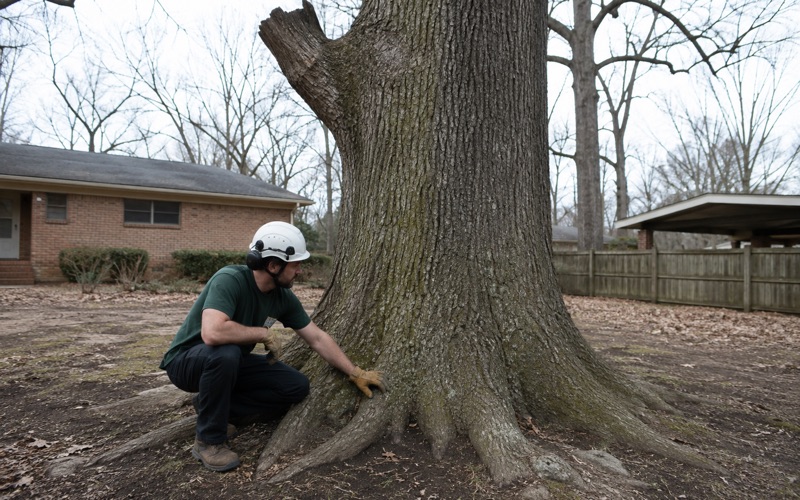
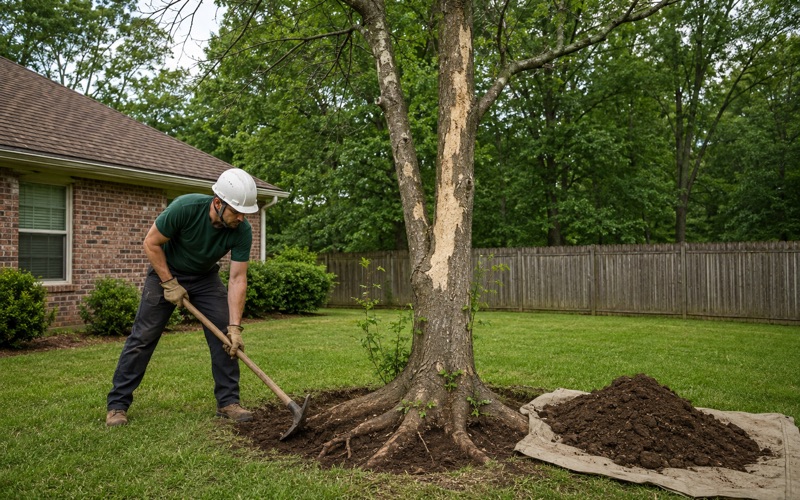
In practice that describes long lateral limbs, included bark and co-dominant unions assembled over decades without a stand-clearing event to reset them — the failures that appear in the first serious wind rather than the ones a routine drive-by catches. We put condition and risk in writing as its own priced deliverable, recording diameter at breast height, visible defects and the critical root zone, so the record can go into a facilities file or an insurance claim instead of living inside a sales visit.
Storm and hazard calls get same-day response, with the plain limits a standard such as ANSI Z133 places on working near energized conductors in wind and ice, and with the utility service-drop disconnect arranged before anyone works near a service line. Pruning and removal specifications are written against ANSI A300 so that what was quoted and what was cut can be checked against each other after the fact.
- 20+ Years in the Tennessee Valley
- Free Written Estimates
- Crane and Narrow-Access Equipment